HSE University Strategic Development

Research & Expertise

Researchers Find More Effective Approach to Revealing Majorana Zero Modes in Superconductors

Researchers Find More Effective Approach to Revealing Majorana Zero Modes in Superconductors
An international team of researchers, including physicists from HSE MIEM, has demonstrated that nonmagnetic impurities can help more accurately reveal Majorana zero modes—quantum states considered promising building blocks for quantum computing. The researchers found that these impurities shift the energy levels that typically obscure the Majorana signal, while leaving the mode itself largely unaffected, thereby making its spectral peak more distinct. The study has been published in Research.

What is Common in Formula 1 Racing and Climate Intelligence? ISSEK HSE Foresight Center Held a Session on Applied Foresight Methods.

AI generated picture
Can a Formula 1 race become a testing ground for digital forecasting, and how can climate intelligence help companies adapt to shocks? The second session of International Symposium “Foresight in a Rapidly Changing World” within XXVI April International Academic Conference named after Evgeny Yasin focused on finding answers to these questions. The discussion, which brought together experts from Russia, Canada, France, and Brazil, was moderated by Yulia Milshina, Deputy Director of the ISSEK Foresight Center (HSE University).

Teaching a Machine to Read the Past: HSE Develops Neural Network to Decipher Manuscripts

Manuscript of playwright Aleksandr Sukhovo-Kobylin
Diaries and letters are an invaluable resource for humanities scholars. But what can be done when the text is impossible to read? At the HSE Faculty of Humanities, this challenge has been translated into the language of mathematics: a team of philologists, historians, and machine learning specialists has created an information system that not only recognises illegible handwriting but also helps analyse archival content.

Scientists Develop Algorithm for Accurate Financial Time Series Forecasting

Scientists Develop Algorithm for Accurate Financial Time Series Forecasting
Researchers at the HSE Faculty of Computer Science benchmarked more than 200,000 model configurations for predicting financial asset prices and realised volatility, showing that performance can be improved by filtering out noise at specific frequencies in advance. This technique increased accuracy in 65% of cases. The authors also developed their own algorithm, which achieves accuracy comparable to that of the best models while requiring less computational power. The study has been published in Applied Soft Computing.

Participants of HSE LED Conference Discuss Progress in Linguistics and Pedagogy

Participants of HSE LED Conference Discuss Progress in Linguistics and Pedagogy
On April 20–21, the HSE School of Foreign Languages held the V International Scientific and Practical Conference ‘Languages. Education. Development’ (HSE LED). It was organised in an online format and dedicated to current trends in the development of modern knowledge in linguistics and pedagogy. Over two days, about 1,700 participants (including more than 220 speakers) took part in the event— 40% more than in the previous academic year.

Scholar Explains How States Can Build Governance in Era of Mega-Shifts

Scholar Explains How States Can Build Governance in Era of Mega-Shifts
How can states maintain governability and stability in a world where established rules are rapidly losing their force? Prof. Ali Farazmand of Florida Atlantic University answered this question in a presentation delivered at the XXVI April International Academic Conference named after Evgeny Yasin. The scholar proposed examining the transformation of the global order through the lens of two ‘mega-shifts’—from the rise of global corporate capitalism to the emerging multipolarity of today—and demonstrated why this transition between eras requires fundamentally new approaches to governance.

HSE Scientists Identify Effective Models for Training Research Personnel for Industry

HSE Scientists Identify Effective Models for Training Research Personnel for Industry
Experts from the HSE Institute for Statistical Studies and Economics of Knowledge have examined industrial PhD programmes across 19 countries worldwide. The analysis shows that the key components of an effective model include co-funding by universities, industry, and government; dual academic supervision; and flexible intellectual property arrangements. The findings have been published in Foresight and STI Governance.

‘We Have Come Very Close to Exploring the Field of Superconducting Electronics’

‘We Have Come Very Close to Exploring the Field of Superconducting Electronics’
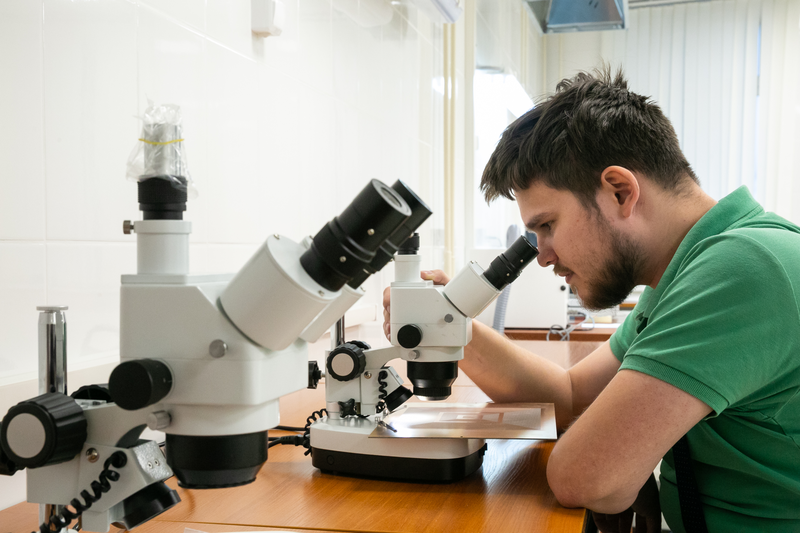
Interdisciplinary research is a defining feature of modern science, and this trend is especially pronounced in the field of quantum technologies. Physics, chemistry, mathematics, and biology form the core fields of research at the Centre for Quantum Metamaterials of the HSE Tikhonov Moscow Institute of Electronics and Mathematics (MIEM). Prof. Alexei Vagov, director of the centre, discusses its key activities, which focus on exploring the prospects of creating materials with predefined properties through manipulating their structure at the quantum level.

HSE Biologists Identify Factors That Accelerate Breast Cancer Recurrence

HSE Biologists Identify Factors That Accelerate Breast Cancer Recurrence
Scientists at HSE University have identified a molecular mechanism underlying aggressive breast cancer. They found that the signals supporting tumour growth originate not from the tumour itself but from its microenvironment. The researchers also demonstrated that reduced levels of the IGFBP6 protein in the tumour microenvironment lead to the accumulation of macrophages—immune cells associated with a higher risk of cancer recurrence. These findings already make it possible to assess patient risk more accurately and may, in the future, enable the development of drugs that target cells of the tumour microenvironment. The study has been published in Current Drug Therapy.

Supercomputers as Superheroes: How High-Performance Computing Is Saving the World

Supercomputers as Superheroes: How High-Performance Computing Is Saving the World
Modern supercomputers can perform more than a trillion calculations per second. This immense capacity enables researchers to address problems that were previously intractable. At the XXVI April International Academic Conference, Ilias Kotsireas, a professor at Wilfrid Laurier University, spoke about the potential of high-performance computing in fields such as weather and climate modelling, astrophysics, and medicine.