HSE University Strategic Development

Tag "research projects"

HSE Scientists Develop DeepGQ: AI-based 'Google Maps' for G-Quadruplexes

HSE Scientists Develop DeepGQ: AI-based 'Google Maps' for G-Quadruplexes
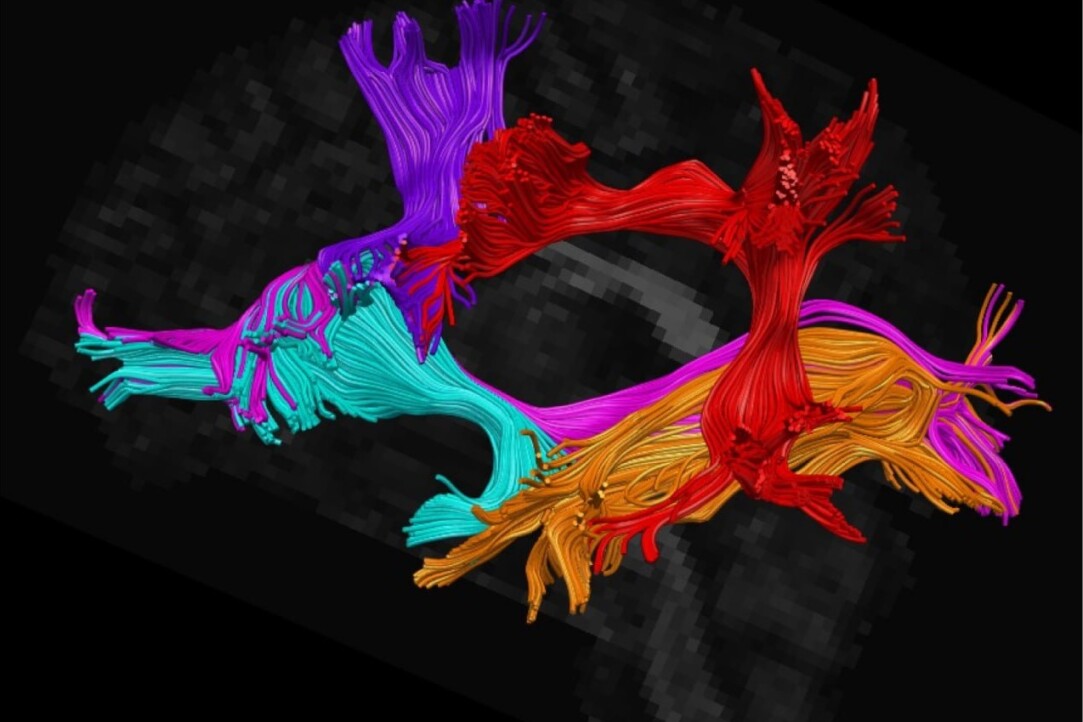
Researchers at the HSE AI Research Centre have developed an AI model that opens up new possibilities for the diagnosis and treatment of serious diseases, including brain cancer and neurodegenerative disorders. Using artificial intelligence, the team studied G-quadruplexes—structures that play a crucial role in cellular function and in the development of organs and tissues. The findings have been published in Scientific Reports.

New Catalyst Maintains Effectiveness for 12 Hours

New Catalyst Maintains Effectiveness for 12 Hours
An international team including researchers from HSE MIEM has developed a catalyst that enables fast and low-cost hydrogen production from water. To achieve this, the scientists synthesised nanoparticles of a complex oxide containing six metals and anchored them onto various substrates. The catalyst supported on reduced graphene layers proved to be nearly three times more efficient than the same oxide without a substrate. This development could significantly reduce the cost of hydrogen production and accelerate the transition to green energy. The study has been published in ACS Applied Energy Materials. The work was carried out under a grant from the Russian Science Foundation.

From Atoms to Regulatory Systems: Highlights from Project Defences of Scientific Initiative Competition

From Atoms to Regulatory Systems: Highlights from Project Defences of Scientific Initiative Competition
HSE University has hosted the final defences of student projects submitted to the Scientific Initiative Competition organised by the Centre for Student Academic Development. Over the course of the year, participants worked on research projects spanning all stages of the research process, from defining a scientific problem to analysing results, and public defence marked the final stage of the competition.

2025 Scientific Collaboration Outcomes: HSE University in Perm and Iran University of Science and Technology

2025 Scientific Collaboration Outcomes: HSE University in Perm and Iran University of Science and Technology
The first year of the project "Internationalization of Companies from Developing Countries: The Role of Intellectual Resources in Response to Exogenous Shocks", implemented in 2025–2027 under the HSE University Joint Basic Research Projects ‘International Academic Cooperation’ competition, has been successfully concluded. The project is carried out by the International Laboratory of Intangible-driven Economy at HSE University in collaboration with Iran University of Science and Technology, under the supervision of Maria Molodchik and Amir Zakeri. All planned commitments for the first year have been fully fulfilled.

Artificial Intelligence Transforms Employment in Russian Companies

Artificial Intelligence Transforms Employment in Russian Companies
Russian enterprises rank among the world’s top ten leaders in AI adoption. In 2023, nearly one-third of domestic companies reported using artificial intelligence. According to a new study by Larisa Smirnykh, Professor at the HSE Faculty of Economic Sciences, the impact of digitalisation on employment is uneven: while the introduction of AI in small and large enterprises led to a reduction in the number of employees, in medium-sized companies, on the contrary, it contributed to job growth. The article has been published in Voprosy Ekonomiki.

Lost Signal: How Solar Activity Silenced Earth's Radiation

Lost Signal: How Solar Activity Silenced Earth's Radiation
Researchers from HSE University and the Space Research Institute of the Russian Academy of Sciences analysed seven years of data from the ERG (Arase) satellite and, for the first time, provided a detailed description of a new type of radio emission from near-Earth space—the hectometric continuum, first discovered in 2017. The researchers found that this radiation appears a few hours after sunset and disappears one to three hours after sunrise. It was most frequently observed during the summer months and less often in spring and autumn. However, by mid-2022, when the Sun entered a phase of increased activity, the radiation had completely vanished—though the scientists believe the signal may reappear in the future. The study has been published in the Journal of Geophysical Research: Space Physics.

70 Researchers from Seven Countries: HSE University–St Petersburg Hosts Conference on Middle Eastern and North African Studies

70 Researchers from Seven Countries: HSE University–St Petersburg Hosts Conference on Middle Eastern and North African Studies
HSE University–St Petersburg held the Third International Academic Conference ‘Army, Elites, and Society in the Middle East and North Africa.’ The event brought together researchers from Russia, Oman, Belarus, Uzbekistan, and several other countries.

HSE Psycholinguists Launch Digital Tool to Spot Dyslexia in Children

HSE Psycholinguists Launch Digital Tool to Spot Dyslexia in Children
Specialists from HSE University's Centre for Language and Brain have introduced LexiMetr, a new digital tool for diagnosing dyslexia in primary school students. This is the first standardised application in Russia that enables fast and reliable assessment of children’s reading skills to identify dyslexia or the risk of developing it. The application is available on the RuStore platform and runs on Android tablets.

Physicists at HSE University Reveal How Vortices Behave in Two-Dimensional Turbulence

Physicists at HSE University Reveal How Vortices Behave in Two-Dimensional Turbulence
Researchers from the Landau Institute for Theoretical Physics of the Russian Academy of Sciences and the HSE University's Faculty of Physics have discovered how external forces affect the behaviour of turbulent flows. The scientists showed that even a small external torque can stabilise the system and extend the lifetime of large vortices. These findings may improve the accuracy of models of atmospheric and oceanic circulation. The paper has been published in Physics of Fluids.

New formats and strategies of business education in Russia

New formats and strategies of business education in Russia
HSE Graduate School of Business hosted a seminar titled “Business Education Today: Challenges, Trends, Solutions,” organized jointly with the Russian Association of Business Education (RABE).