HSE University Strategic Development

Tag "mirror laboratories"

Living with Volcanoes and Tsunamis

Living with Volcanoes and Tsunamis
It is not easy to get university graduates and students interested in living and working in Kamchatka, a remote region with harsh natural conditions and an extreme climate. Mirror Laboratories, a joint project of the HSE Institute of Education and Kamchatka State University (KamGU), encourages the development of ‘explorer’ competencies and the modernisation of the region’s education system. The HSE News Service discussed the project with Taras Pashchenko, Chief Expert of the HSE Laboratory for Curriculum Design.

HSE University Installs Geoscan Station at IIT Bombay

HSE University Installs Geoscan Station at IIT Bombay
A Russian ground station for receiving SONIKS satellite data has been installed on the campus of the Indian Institute of Technology Bombay (IIT Bombay). Developed by Geoscan, the system will become part of a mirror laboratory project run jointly by HSE University and one of India’s leading universities.

'Our Research Is Primarily Focused on Developing Lasers as Carriers of Information'

'Our Research Is Primarily Focused on Developing Lasers as Carriers of Information'
The International Laboratory of Quantum Optoelectronics at HSE University–St Petersburg develops semiconductor microlasers. The components and systems created by the laboratory also enable high-speed data transmission and processing. Natalia Kryzhanovskaya, Head of the Laboratory and Doctor of Sciences in Physics and Mathematics, spoke with the HSE News Service about the laboratory’s research areas and future prospects.

HSE to Launch Laboratories in Space Research and Nanoelectronics with One of India’s Top Universities

HSE to Launch Laboratories in Space Research and Nanoelectronics with One of India’s Top Universities
Scientists from the HSE University and the Indian Institute of Technology Bombay (IIT Bombay) will carry out joint research in the storage, transmission, and processing of data in space systems. A second major project will be a laboratory for superconducting spintronics—a promising field in modern nanoelectronics.

HSE Researchers Introduce Novel Symmetry-Aware Neural Network Architecture

HSE Researchers Introduce Novel Symmetry-Aware Neural Network Architecture
Researchers at the HSE Laboratory for Geometric Algebra and Applications have developed a new neural network architecture that can accelerate and streamline data analysis in physics, biology, and engineering. The scientists presented their solution on July 16 in Vancouver at ICML 2025, one of the world's leading conferences on machine learning. Both the paper and the source code are publicly available.

'Biotech Is Booming Worldwide'

'Biotech Is Booming Worldwide'
For more than five years, the International Laboratory of Bioinformatics at the HSE Faculty of Computer Science has been advancing cutting-edge research. During this time, its scientists have achieved major breakthroughs, including the development of CARDIOLIFE—a unique genetic test unmatched worldwide that predicts the likelihood of cardiovascular disease. With the active participation of HSE students, including doctoral students, the team is also working on a new generation of medicines. In this interview with the HSE News Service, Laboratory Head Maria Poptsova shares insights into their work.

AI to Enable Accurate Modelling of Data Storage System Performance

AI to Enable Accurate Modelling of Data Storage System Performance
Researchers at the HSE Faculty of Computer Science have developed a new approach to modelling data storage systems based on generative machine learning models. This approach makes it possible to accurately predict the key performance characteristics of such systems under various conditions. Results have been published in the IEEE Access journal.

'The Branch of Medicine That Our Developments Primarily Target Is Cardiology'

'The Branch of Medicine That Our Developments Primarily Target Is Cardiology'
The application of mathematical models to the diagnosis and treatment of cardiovascular diseases contributes to the effective detection of patient predispositions and supports the selection of best treatment strategies. The use of mathematical models helps create new diagnostic tools and train neural networks to assist clinicians. Researchers from HSE University and colleagues from Saratov State Medical University are engaged in this work as part of the Mirror Laboratories project. In this interview, Natalya Stankevich, Senior Research Fellow at the International Laboratory of Dynamical Systems and Applications of the HSE Campus in Nizhny Novgorod, talks about what the collaboration has achieved so far.

Mirror Laboratory of HSE and UTM Shares Its First Achievements

Petronas Twin Towers, Malaysia
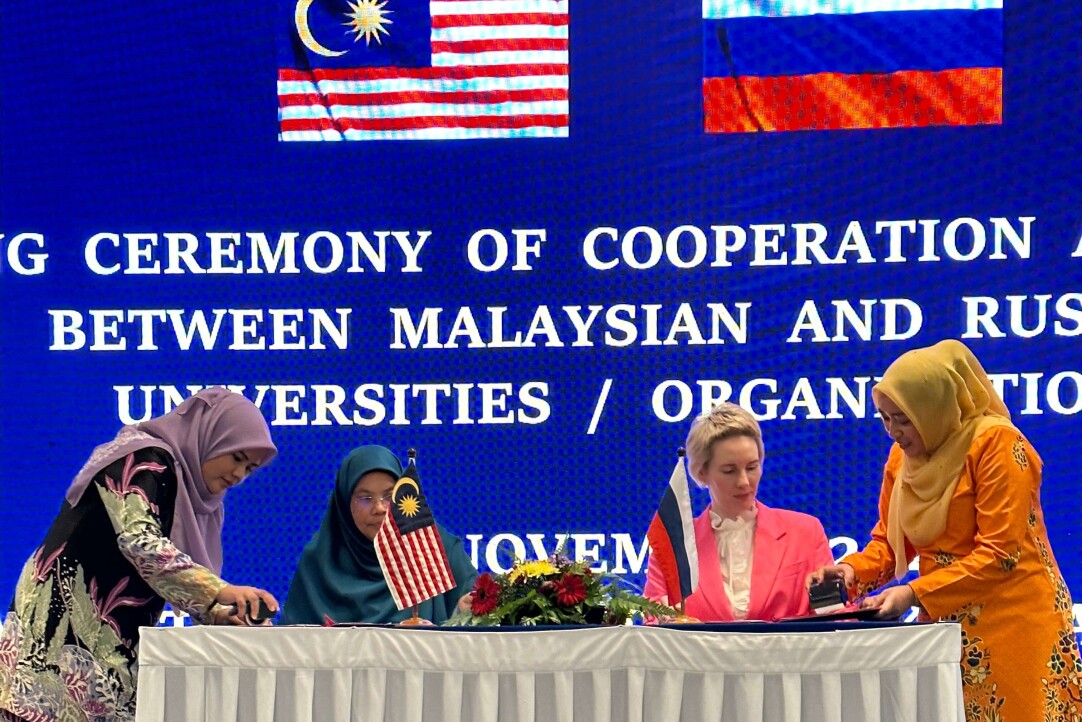
In autumn of 2024, a delegation from Malaysia, led by Minister of Higher Education Zambry bin Abdul Kadir, visited the HSE campus in St Petersburg. One of the key topics of discussion was the initial results of the mirror laboratory, a joint initiative between HSE University-St Petersburg and the University of Technology Malaysia (UTM).

HSE, University of Delhi, and Geoscan Launch Space Research Project

HSE, University of Delhi, and Geoscan Launch Space Research Project
HSE University and the University of Delhi (India), in partnership with Geoscan (a portfolio company of the Innopraktika non-state development institute), have agreed to establish an international scientific mirror laboratory on data storage, processing, and transmission in space systems. The agreement was signed on January 15, 2025, during a visit to India by an HSE University delegation led by Rector Nikita Anisimov.
1 2