HSE University Strategic Development

Tag "Priority 2030"

HSE University Presents Research Results at AI Conference in Oman

HSE University Presents Research Results at AI Conference in Oman
In April 2026, the International Conference on Intelligent Systems and Artificial Intelligence Applications (ISAA 2026) was held at the University of Nizwa in the Sultanate of Oman. The event was co-organised by HSE University, the University of Nizwa, and the University of Technology and Applied Sciences–Ibri. Researchers from HSE University were among the key speakers at the conference.

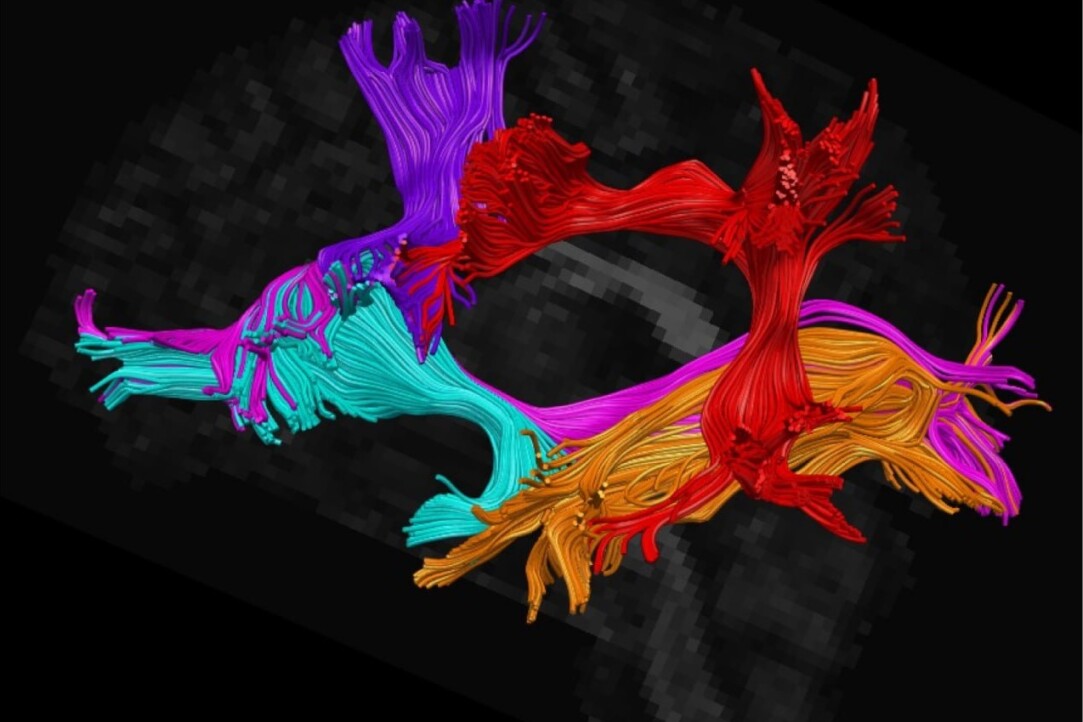
How the Brain Processes a Word: HSE Researchers Compare Reading Routes in Adults and Children

How the Brain Processes a Word: HSE Researchers Compare Reading Routes in Adults and Children
Researchers from the HSE Center for Language and Brain used magnetoencephalography to study how the brains of adults and children respond to words during reading. They showed that in children the brain takes longer to process words that are frequently used in everyday speech, while rare words and pseudowords are processed in the same way—slowly and in parts. With age, the system is reorganised: high-frequency words shift to a fast route, whereas new letter combinations are still analysed slowly. The study was published in the journal Psychophysiology.

How Neural Networks Detect and Interpret Wordplay: New Insights from HSE Researchers

How Neural Networks Detect and Interpret Wordplay: New Insights from HSE Researchers
An international team including researchers from the HSE Faculty of Computer Science has presented KoWit-24, an annotated dataset of 2,700 Russian-language Kommersant news headlines containing wordplay. The dataset enables an assessment of how artificial intelligence detects and interprets wordplay. Experiments with five large language models show that even advanced systems still make mistakes, and that interpreting wordplay is more challenging for them than detecting it. The results were presented at the RANLP conference; the paper is available on Arxiv.org, and the dataset and the code for reproducing the experiments are available on GitHub.

HSE Researchers Experimentally Demonstrate Positive Effects of Urban Parks on the Brain

HSE Researchers Experimentally Demonstrate Positive Effects of Urban Parks on the Brain
Scientists at HSE University have investigated the effect of parks on the cognitive and emotional resources of city dwellers. The researchers compared brain electrical activity in 30 participants while they watched videos of walks through parks and along busy highways. The results showed that green urban environments with trees produce a consistent effect across individuals, helping the brain calm down and relax. By contrast, walks along busy streets were found to be distracting. The findings have been published in Scientific Reports.

HSE University–St Petersburg and Vietnamese Universities to Launch Joint Research Projects and International Schools for Students

HSE University–St Petersburg and Vietnamese Universities to Launch Joint Research Projects and International Schools for Students
A delegation from HSE University–St Petersburg has visited partner universities in Vietnam. Read on to discover the opportunities international ties present for scientists and why there is a growing demand for specialists in the economy and culture of Southeast Asia in Russia.

Scientists Show That Peer Influence Can Be as Effective as Expert Advice

Scientists Show That Peer Influence Can Be as Effective as Expert Advice
Eating habits can be shaped not only by the authority of medical experts but also through ordinary conversations among friends. Researchers at HSE University have shown that advice from peers to reduce sugar consumption is just as effective as advice from experts. The study's findings have been published in Frontiers in Nutrition.

Language Mapping in the Operating Room: HSE Neurolinguists Assist Surgeons in Complex Brain Surgery

Language Mapping in the Operating Room: HSE Neurolinguists Assist Surgeons in Complex Brain Surgery
Researchers from the HSE Center for Language and Brain took part in brain surgery on a patient who had been seriously wounded in the SMO. A shell fragment approximately five centimetres long entered through the eye socket, penetrated the cranial cavity, and became lodged in the brain, piercing the temporal lobe responsible for language. Surgeons at the Burdenko Main Military Clinical Hospital removed the foreign object while the patient remained conscious. During the operation, neurolinguists conducted language tests to ensure that language function was preserved.

HSE Scientists Use MEG for Precise Language Mapping in the Brain

HSE Scientists Use MEG for Precise Language Mapping in the Brain
Scientists at the HSE Centre for Language and Brain have demonstrated a more accurate way to identify the boundaries of language regions in the brain. They used magnetoencephalography (MEG) together with a sentence-completion task, which activates language areas and reveals their functioning in real time. This approach can help clinicians plan surgeries more effectively and improve diagnostic accuracy in cases where fMRI is not the optimal method. The study has been published in the European Journal of Neuroscience.

Transition to Sustainable Development Requires Deep Structural Transformation of Business

Transition to Sustainable Development Requires Deep Structural Transformation of Business
A group of researchers has proposed assessing the ESG transformation of businesses through the partner turnover ratio in raw material and distribution supply chains. The researchers note that the path towards sustainability requires a deep and often costly restructuring of partner networks. This and other papers were presented at the Third International Annual Conference ‘ESG Corporate Dynamics: the Challenges for Emerging Capital Markets.’

2025 Scientific Collaboration Outcomes: HSE University in Perm and Iran University of Science and Technology

2025 Scientific Collaboration Outcomes: HSE University in Perm and Iran University of Science and Technology
The first year of the project "Internationalization of Companies from Developing Countries: The Role of Intellectual Resources in Response to Exogenous Shocks", implemented in 2025–2027 under the HSE University Joint Basic Research Projects ‘International Academic Cooperation’ competition, has been successfully concluded. The project is carried out by the International Laboratory of Intangible-driven Economy at HSE University in collaboration with Iran University of Science and Technology, under the supervision of Maria Molodchik and Amir Zakeri. All planned commitments for the first year have been fully fulfilled.