HSE University Strategic Development

Tag "neuroscience"

Wearable Device Data and Saliva Biomarkers Help Assess Stress Resilience

Wearable Device Data and Saliva Biomarkers Help Assess Stress Resilience
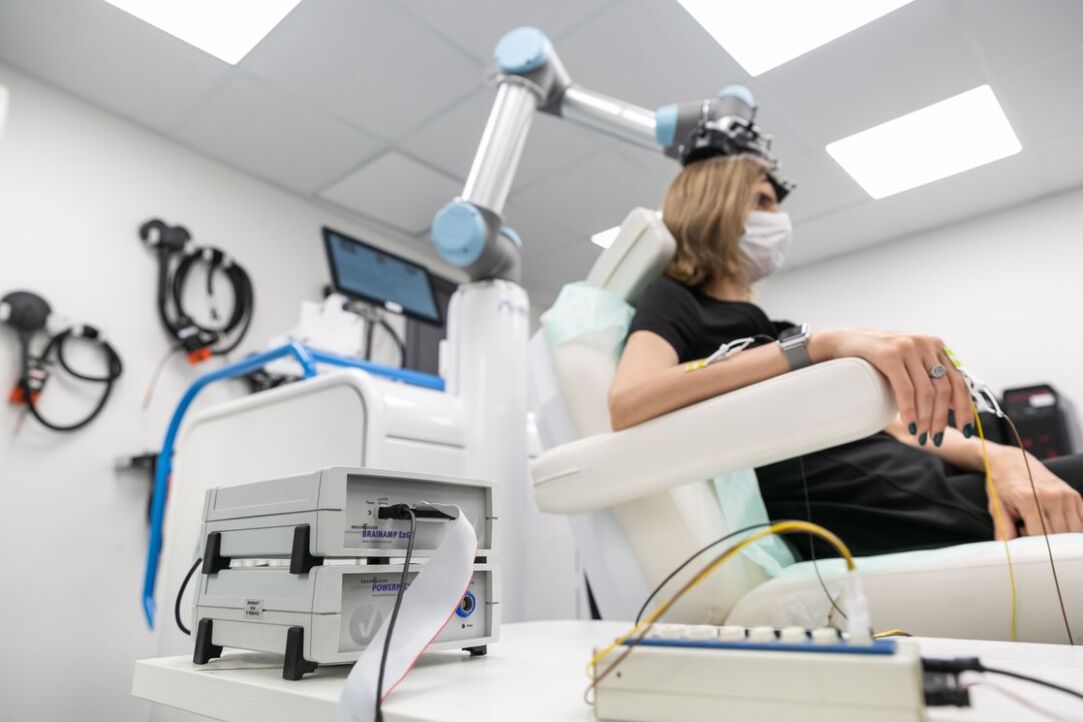
A team of scientists, including researchers from HSE University, has proposed a method for assessing stress resilience using physiological markers derived from wearable devices and saliva samples. The participants who adapted better to stress showed higher heart rate variability, higher zinc concentrations in saliva, and lower potassium levels.  The findings were published in the Journal of Molecular Neuroscience.

HSE Researchers Propose New Method of Verbal Fluency Analysis for Early Detection of Cognitive Impairment

HSE Researchers Propose New Method of Verbal Fluency Analysis for Early Detection of Cognitive Impairment
Researchers from the HSE Center for Language and Brain and the Mental Health Research Centre have proposed a new method of linguistic analysis that enables the distinction between normal and pathological ageing. Using this approach, they showed that patterns in patients’ word choices during verbal fluency tests allow clinicians to more accurately differentiate clinically significant impairments from subjective memory complaints. Incorporating this type of analysis into clinical practice could improve the accuracy of early dementia diagnosis. The results have been published in Applied Neuropsychology: Adult.

Scientists Reveal How Language Supports Complex Cognitive Processing in the Brain

Scientists Reveal How Language Supports Complex Cognitive Processing in the Brain
Valeria Vinogradova, a researcher at HSE University, together with British colleagues, studied how language proficiency affects cognitive processing in deaf adults. The study showed that higher language proficiency—regardless of whether the language is signed or spoken—is associated with higher activity and stronger functional connectivity within the brain network responsible for cognitive task performance. The findings have been published in Cerebral Cortex.

Scientists Show That Peer Influence Can Be as Effective as Expert Advice

Scientists Show That Peer Influence Can Be as Effective as Expert Advice
Eating habits can be shaped not only by the authority of medical experts but also through ordinary conversations among friends. Researchers at HSE University have shown that advice from peers to reduce sugar consumption is just as effective as advice from experts. The study's findings have been published in Frontiers in Nutrition.

Language Mapping in the Operating Room: HSE Neurolinguists Assist Surgeons in Complex Brain Surgery

Language Mapping in the Operating Room: HSE Neurolinguists Assist Surgeons in Complex Brain Surgery
Researchers from the HSE Center for Language and Brain took part in brain surgery on a patient who had been seriously wounded in the SMO. A shell fragment approximately five centimetres long entered through the eye socket, penetrated the cranial cavity, and became lodged in the brain, piercing the temporal lobe responsible for language. Surgeons at the Burdenko Main Military Clinical Hospital removed the foreign object while the patient remained conscious. During the operation, neurolinguists conducted language tests to ensure that language function was preserved.

HSE Scientists Use MEG for Precise Language Mapping in the Brain

HSE Scientists Use MEG for Precise Language Mapping in the Brain
Scientists at the HSE Centre for Language and Brain have demonstrated a more accurate way to identify the boundaries of language regions in the brain. They used magnetoencephalography (MEG) together with a sentence-completion task, which activates language areas and reveals their functioning in real time. This approach can help clinicians plan surgeries more effectively and improve diagnostic accuracy in cases where fMRI is not the optimal method. The study has been published in the European Journal of Neuroscience.

Researchers Identify Link between Bilingualism and Cognitive Efficiency

Researchers Identify Link between Bilingualism and Cognitive Efficiency
An international team of researchers, including scholars from HSE University, has discovered that knowledge of a foreign language can improve memory performance and increase automaticity when solving complex tasks. The higher a person’s language proficiency, the stronger the effect. The results have been published in the journal Brain and Cognition.

‘Engagement in the Scientific Process’: HSE Launches Master’s Programme in Neurobiology

‘Engagement in the Scientific Process’: HSE Launches Master’s Programme in Neurobiology
The HSE University Academic Council has elected to launch a new Master's programme in Neurobiology for students majoring in Biology. Students of the programme will have access to unique equipment and research groups, providing them with the knowledge and experience to pursue careers in science, medicine and pharmacy, IT and neurotechnology, and education and HR services.

Internal Clock: How Heart Rate and Emotions Shape Our Perception of Time

Internal Clock: How Heart Rate and Emotions Shape Our Perception of Time
Our perception of time depends on heart rate—this is the conclusion reached by neuroscientists at HSE University. In their experiment, volunteers watched short videos designed to evoke specific emotions and estimated each video's duration, while researchers recorded their heart activity using ECG. The study found that the slower a participant's heart rate, the shorter they perceived the video to be—especially when watching unpleasant content. The study has been published in Frontiers in Psychology.

Scientists Develop New Method to Detect Motor Disorders Using 3D Objects

Scientists Develop New Method to Detect Motor Disorders Using 3D Objects
Researchers at HSE University have developed a new methodological approach to studying motor planning and execution. By using 3D-printed objects and an infrared tracking system, they demonstrated that the brain initiates the planning process even before movement begins. This approach may eventually aid in the assessment and treatment of patients with neurodegenerative diseases such as Parkinson’s. The paper has been published in Frontiers in Human Neuroscience.
1 2