HSE University Strategic Development

Tag "HSE as a Technological University"

HSE Scientists Contribute to Development of Postquantum Ring Signature for Sber

HSE Scientists Contribute to Development of Postquantum Ring Signature for Sber
A new cryptographic data protection mechanism has been jointly proposed by experts from the HSE Tikhonov Moscow Institute of Electronics and Mathematics, Sber, and QApp. The researchers have developed a postquantum ring signature scheme that ensures anonymity (within a defined group of participants), as well as the integrity and authentication of the source of digital transactions, even in the presence of an adversary equipped with a quantum computer.

Researchers Identify Link between Bilingualism and Cognitive Efficiency

Researchers Identify Link between Bilingualism and Cognitive Efficiency
An international team of researchers, including scholars from HSE University, has discovered that knowledge of a foreign language can improve memory performance and increase automaticity when solving complex tasks. The higher a person’s language proficiency, the stronger the effect. The results have been published in the journal Brain and Cognition.

HSE University and SAFC Launch Cooperation on Nature and Climate Projects in Kazakhstan

Yuri Kim (second left), Victor Proskuryakov (far right)
The Сentre of Digital Technologies for Nature-Based Solutions at HSE University and the Kazakhstan-based company SAFC are planning joint work on the implementation of climate projects in Kazakhstan. Specialists from the HSE centre visited the site of the country’s first forest climate project and signed a cooperation agreement with SAFC.

Lost Signal: How Solar Activity Silenced Earth's Radiation

Lost Signal: How Solar Activity Silenced Earth's Radiation
Researchers from HSE University and the Space Research Institute of the Russian Academy of Sciences analysed seven years of data from the ERG (Arase) satellite and, for the first time, provided a detailed description of a new type of radio emission from near-Earth space—the hectometric continuum, first discovered in 2017. The researchers found that this radiation appears a few hours after sunset and disappears one to three hours after sunrise. It was most frequently observed during the summer months and less often in spring and autumn. However, by mid-2022, when the Sun entered a phase of increased activity, the radiation had completely vanished—though the scientists believe the signal may reappear in the future. The study has been published in the Journal of Geophysical Research: Space Physics.

‘Engagement in the Scientific Process’: HSE Launches Master’s Programme in Neurobiology

‘Engagement in the Scientific Process’: HSE Launches Master’s Programme in Neurobiology
The HSE University Academic Council has elected to launch a new Master's programme in Neurobiology for students majoring in Biology. Students of the programme will have access to unique equipment and research groups, providing them with the knowledge and experience to pursue careers in science, medicine and pharmacy, IT and neurotechnology, and education and HR services.

From Machine Learning in Investment Strategies to Climate Shocks: Highlights of the 14th Financial Economics Conference at ICEF

From Machine Learning in Investment Strategies to Climate Shocks: Highlights of the 14th Financial Economics Conference at ICEF
How are investment decisions changing under conditions of inflationary shocks and the application of machine learning methods? Can financial risks be predicted using new metrics? What is the role of banks' climate resilience, and how do geopolitical upheavals affect global value chains? These questions were at the centre of discussion at the 14th International Moscow Conference on Financial Economics held on November 28 and organised by the International College of Economics and Finance (ICEF) at HSE University.

HSE University Presents Game Engineering Innovations at Moscow International Video Games Week

HSE University Presents Game Engineering Innovations at Moscow International Video Games Week
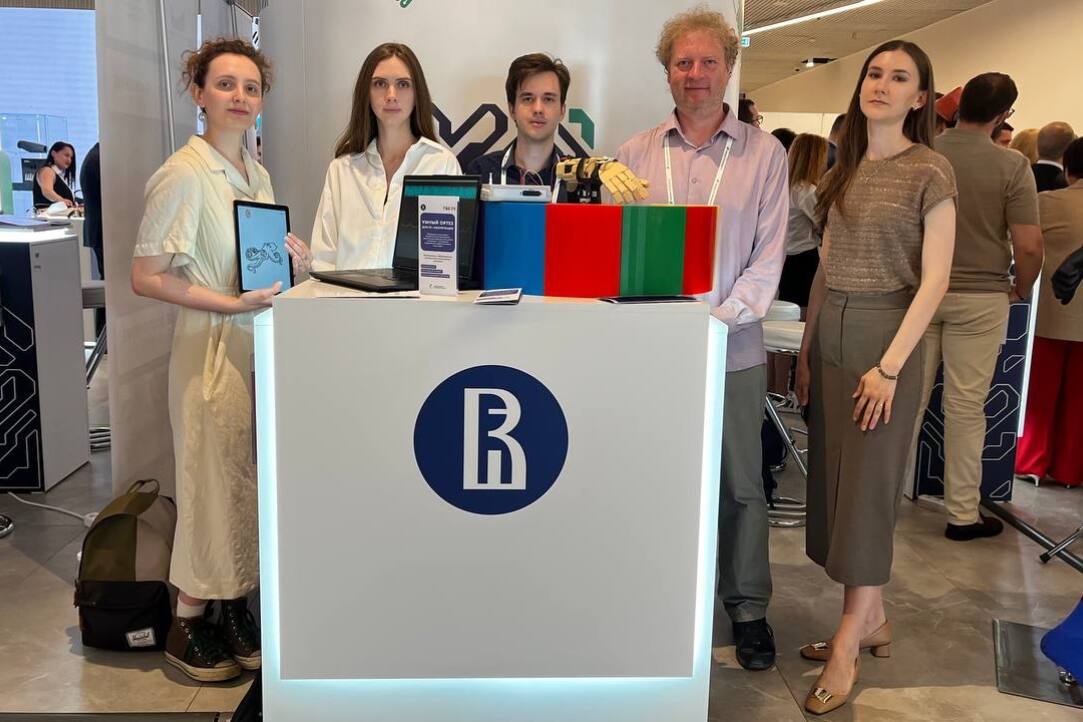
HSE University recently participated in a key 2025 gaming industry event, the Moscow International Video Games Week (MIVGW). HSE MIEM took part in several formats, hosting an open day for its online Master’s programme ‘Digital Engineering for Computer Games’ and a workshop ‘Gamedev Automation: How AI is Changing the Approach to Virtual Simulation Design.’ Furthermore, the ‘Game Engineering and Interactive Systems’ workshop and indie studio Bear Head Studio showcased their new game engine—the Claw Engine—at the exhibition area at Skolkovo. Experts of the HSE Faculty of Computer Science joined in panel discussions.

HSE Seeks New Ideas for AI Agents: Initiative Competition Launched

HSE Seeks New Ideas for AI Agents: Initiative Competition Launched
HSE University is inviting researchers and lecturers to present concepts for new digital products based on artificial intelligence. The best projects will receive expert and technological support. Applications are open until December 19, 2025.

HSE Tops Ranking of Universities Participating in Priority 2030 Programme

Evgeny Koucheryavy, Elena Odoevskaya, Nikita Anisimov, Leonid Gokhberg, Alexey Naumov
The Russian Ministry of Science and Higher Education has published an updated list of participants in the Priority 2030 programme. A total of 106 universities will receive support this year. HSE University was included in the first group and topped the ranking.

HSE Psycholinguists Launch Digital Tool to Spot Dyslexia in Children

HSE Psycholinguists Launch Digital Tool to Spot Dyslexia in Children
Specialists from HSE University's Centre for Language and Brain have introduced LexiMetr, a new digital tool for diagnosing dyslexia in primary school students. This is the first standardised application in Russia that enables fast and reliable assessment of children’s reading skills to identify dyslexia or the risk of developing it. The application is available on the RuStore platform and runs on Android tablets.